
Available now
Filter and amplifier response
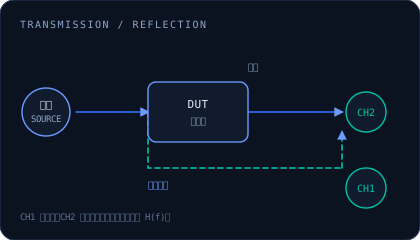
Measure the complex input-to-output transfer function: passband, cutoff, resonance, and phase shift.
APPLICATIONS
Frequency response and impedance measurements often answer more than a single number. Each scenario below is marked as available now or available with the impedance release, so you can judge fit for the current stage.
AVAILABLE NOW
These scenarios can be explored with the current two-channel gain/phase sweeps; fixtures and wiring depend on the DUT.
Measure the complex input-to-output transfer function: passband, cutoff, resonance, and phase shift.
Use high-impedance probes or injection to measure node-to-node magnitude and phase in feedback networks and signal chains.
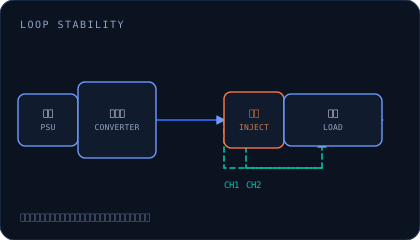
Inject a small signal into the loop and measure loop gain and phase to assess phase margin and stability.
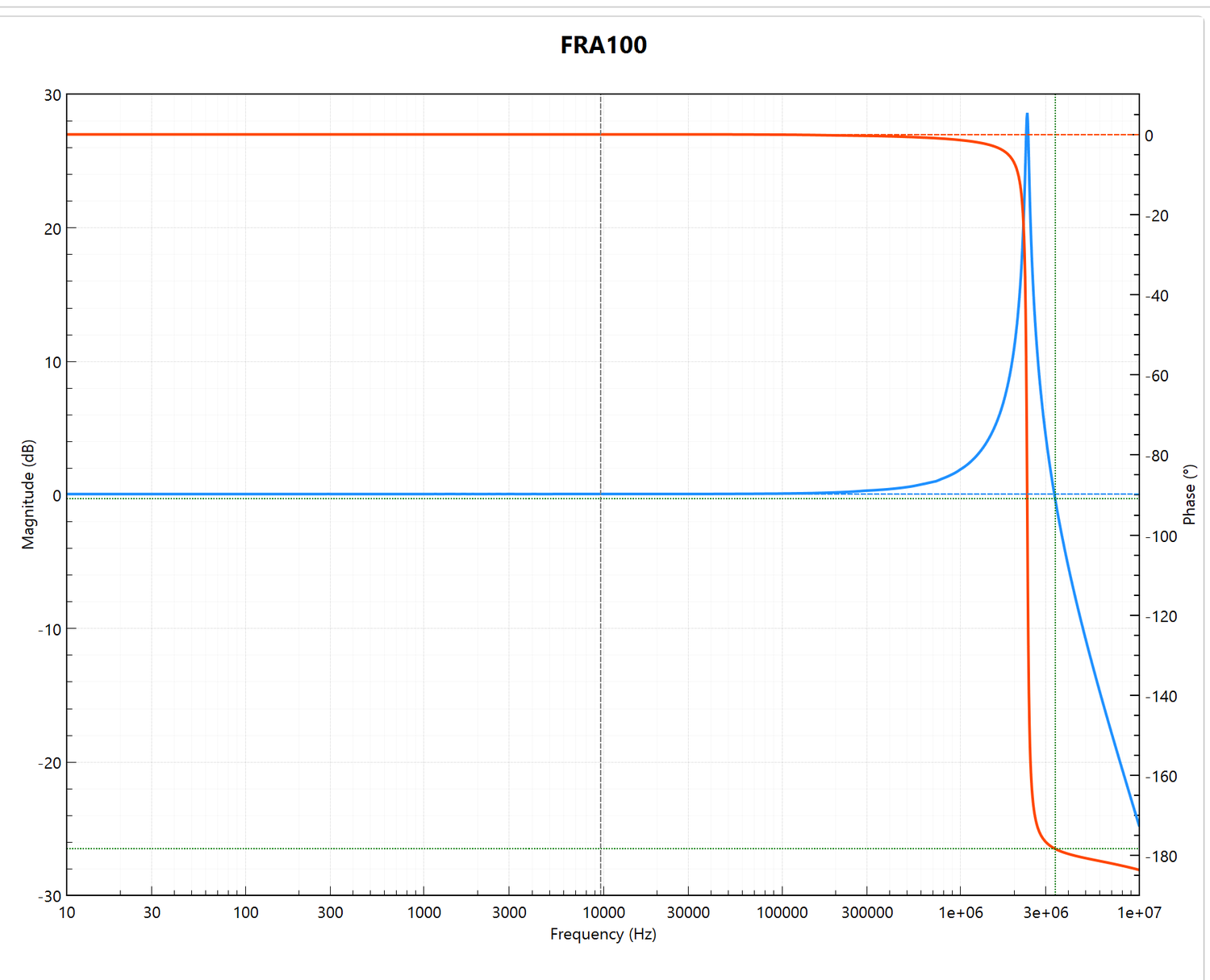
Bring frequency-response measurement into labs and research: from a single-pole RC to filters, amplifiers, and resonant circuits.
WITH IMPEDANCE RELEASE
These scenarios depend on four-terminal vector-cancellation impedance measurement and calibration, which are in development. They will open as they are validated on real hardware.

Measure impedance versus frequency for capacitors, inductors, and resistors; extract ESR/ESL and self-resonance.
Observe resonance/anti-resonance, Q factor, and impedance changes in piezo ceramics, ultrasonic transducers, and sensors.
Evaluate power-delivery-network impedance across frequency to support decoupling and power-integrity design.
The current prototype implements two-channel gain/phase sweeps only. Impedance scenarios are in development and are not offered as delivered capability.
Tell us what you measure, the frequency range, and the accuracy you need. We will assess the current prototype or discuss customization and joint testing.